
When we talk about teenage pregnancy in Kenya, we often ask the wrong questions. We ask: “Why are so many girls getting pregnant?”. We talk about peer pressure. We talk about irresponsible behaviour. We talk about sex education and parenting.
But perhaps we need to ask a more uncomfortable question: What happens when a girl cannot afford the basic things she needs to live with dignity?
A recent NTV Kenya investigation into teenage pregnancy brought renewed attention to this crisis. The report highlighted the shocking number of girls aged 15 to 19 who have ever been pregnant in some Kenyan counties:
- Samburu: 50%
- West Pokot: 36%
- Marsabit: 29%
- Narok: 28%
- Meru: 24%
- National average: 15%
Source: Kenya Demographic and Health Survey 2022.
Behind these numbers are stories of poverty, “sponsors”, unmet basic needs and girls navigating situations that many adults would struggle to survive.
For those of us working closely with girls and women, these stories are not new. They are part of a reality that Kenya needs to confront more honestly.
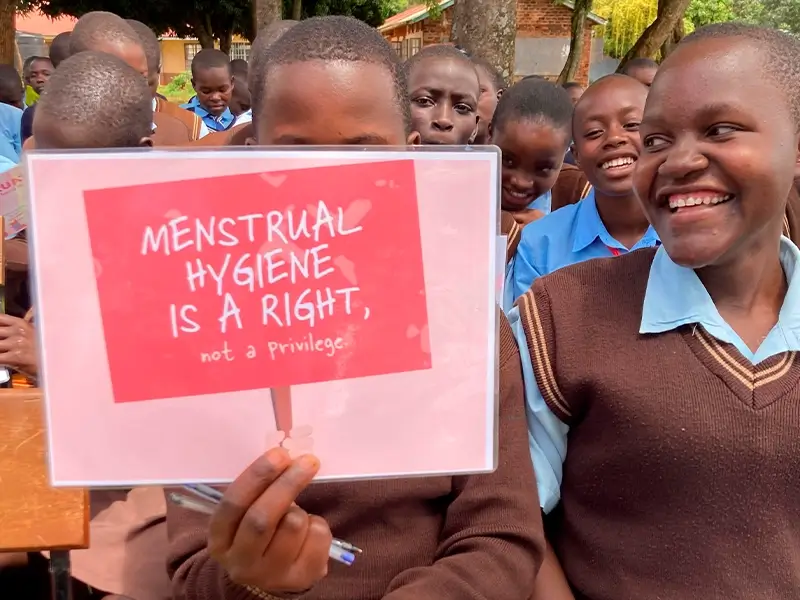
Period poverty is about much more than periods
Period poverty is often described simply as the inability to afford sanitary pads. But the reality is much bigger. For a girl living in poverty, menstruation can bring an additional monthly financial burden to a household that may already be struggling to afford food, rent, school fees and other essentials. When there is no money for pads, a girl may stay at home from school. She may use unsafe or uncomfortable alternatives. She may experience shame, anxiety and isolation. And in some cases, she may look elsewhere for help.
Research in rural western Kenya has documented how menstrual needs can intersect with transactional sex and sexual and reproductive health risks. Girls and young women interviewed in recent studies described situations where access to basic necessities, including sanitary pads, became entangled with relationships with men or older boys who could provide money or material support.
Poverty and the inability to afford basic necessities can contribute to girls entering transactional relationships, often where there are significant differences in age, power and economic security.
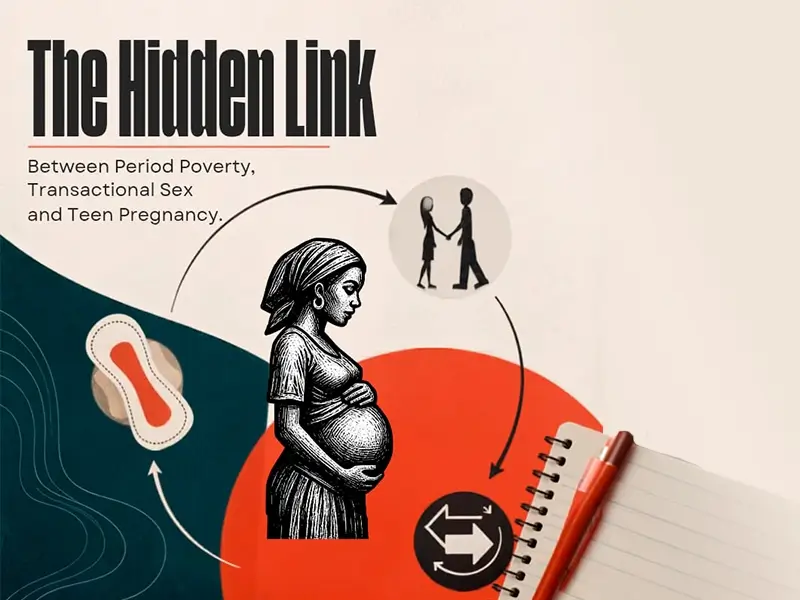
This is the uncomfortable reality we cannot ignore. For some girls, a packet of pads is not just a packet of pads. It can become part of a wider chain of vulnerability.
When a basic need creates vulnerability
Imagine being a teenage girl.
- You have your period.
- You need pads.
- Your mother cannot afford them.
- Your father is unemployed.
- You are afraid of leaking at school.
- You are already embarrassed because menstruation remains surrounded by shame and silence.
Then someone offers to help. Perhaps it is a boyfriend. Perhaps it is an older man. Perhaps it is someone known and trusted by the community.
The help may initially appear to be simple: money for pads, food, soap, clothes or other basic necessities. But the relationship may come with expectations.
Research in Kenya has shown that transactional relationships can be driven by poverty and the need to obtain essential items. Girls may enter relationships where their economic dependence reduces their ability to negotiate the terms of sex, including whether contraception or condoms are used.
The consequences can include unintended pregnancy, sexually transmitted infections, school dropout and, in some cases, abandonment.
We need to be careful with our language here. This is not about suggesting that every girl who cannot afford pads will engage in transactional sex. Nor is period poverty the only cause of teenage pregnancy. Teenage pregnancy is complex. It is connected to poverty, sexual violence, gender inequality, lack of access to sexual and reproductive health services, school dropout, child protection failures and harmful social norms. But period poverty can be one part of that wider picture.
Accountability
One of the most troubling aspects of conversations about teenage pregnancy is how quickly society focuses on the girl.
- Why did she have sex?
- Why did she not say no?
- Why did she not protect herself?
- Why did she not know better?
But where are the questions about the men and boys involved?,
Where are the questions about power?, Where are the questions about adults who exploit economic vulnerability?, Where are the questions about why a child needs to depend on a “sponsor” for something as basic as sanitary products?
The recent NTV reporting asked an important question: “where are the perpetrators?”. We cannot continue treating teenage pregnancy as a problem caused solely by girls making “bad choices” while ignoring the conditions in which those choices are made.
- A choice made when you are hungry is different from a choice made when your basic needs are secure.
- A choice made when you depend on someone financially is different from a choice made between equals.
And when a girl is a child and the other person holds greater economic or social power, we must be especially honest about exploitation and protection.
Menstrual health is child protection
This is why menstrual health should not be treated as a small hygiene issue.
- It is an issue of dignity.
- It is an education issue.
- It is an economic issue.
- It is a gender equality issue.
- And increasingly, we must recognise that it is also a child protection issue.
When girls have reliable access to menstrual products, underwear, clean toilets, water and accurate information, we are doing more than helping them manage their periods. We are reducing one source of vulnerability.
Research from Kenya and other settings shows how resource insecurity can intersect with sexual and reproductive health risks. In some communities, economic hardship has been linked to transactional sex for basic needs, including menstrual products, with unintended pregnancy among the potential consequences.
- No single intervention can solve teenage pregnancy.
- Pads alone will not solve it.
But neither can we afford to dismiss menstrual health as irrelevant. For a girl already living at the edge of poverty, removing even one monthly pressure can matter.
The conversation Kenya needs to have
We need to move beyond simply counting the number of pregnant teenagers. We need to ask what happened before the pregnancy.
- Was the girl in school?
- Could she afford her basic needs?
- Did she have access to menstrual products?
- Was there someone pressuring or exploiting her?
- Could she access contraception and sexual and reproductive health information without fear or shame?
- Was she safe at home and in her community?
- Did adults around her see the warning signs?
And most importantly: Could this pregnancy have been prevented if we had addressed the conditions that made her vulnerable much earlier?
Teen pregnancy is not just a health statistic. Behind every number is a girl with a story. And sometimes, that story begins with something as ordinary and preventable as not having access to a basic menstrual product.
As Kenya confronts the crisis of teenage pregnancy, we must stop looking at these problems in isolation.
- Period poverty is connected to poverty.
- Poverty can create vulnerability.
- Vulnerability can be exploited.
- Exploitation can lead to unintended pregnancy.
And pregnancy can lead to school dropout, stigma, abandonment and a cycle of poverty that can continue into the next generation. Breaking that cycle requires us to think bigger.
- We need sustained access to menstrual products.
- We need comprehensive menstrual health education.
- We need stronger child protection systems.
- We need safe access to sexual and reproductive health information and services.
- We need to keep girls in school.
- We need to address the economic conditions that make girls vulnerable to exploitation.
Most of all, we need to stop asking girls to be more resilient in systems that continue to fail them. A girl should never have to choose between her dignity and her safety. And she should never have to exchange sex for something as basic as the right to manage her period.