
Period poverty often hides in plain sight, behind missed classes, whispered excuses, and quiet worry.
For many girls, the problem is not only that pads are unaffordable or unavailable; it’s that the information, support, and school facilities needed for dignified menstrual management are missing too.
That’s the cycle PadMad is working to break. Ideally, to end period poverty by combining reliable products with education and community-led solutions.
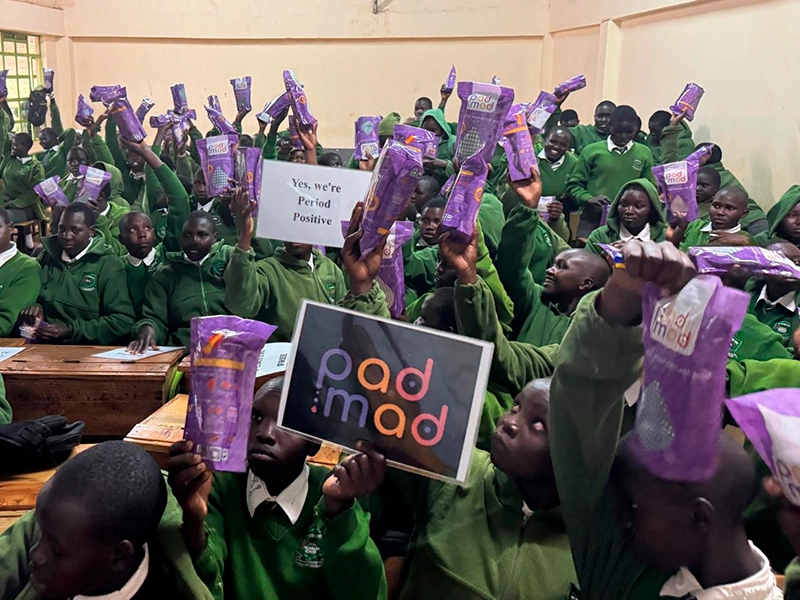
What we do is simple in idea and complex in impact. We give reusable, plastic-free pads. We teach menstrual health to entire communities (not just girls). Additionally, we partner with local groups to ensure change stays local.
Why This Matters: The Facts Behind the Feeling
The barriers girls face are real and measurable. UNESCO and peer-reviewed research have long warned that menstruation contributes to school absence. Estimates suggest that about one in ten girls in some regions miss school during their periods. For others, that can add up to as much as 10–20% of school days in a year.
Menstrual education and basic school facilities are still scarce globally. A 2024 WHO report found that only about 39% of schools worldwide provide menstrual health education and fewer than one in three schools even have bins for menstrual waste. This is a gap that is far wider in low-resource settings.
PadMad’s 3-Pillar Approach Breaks the Cycle
Ending period poverty requires more than simply handing out pads. At PadMad, we know that lasting change happens when education, sustainable products, and environmental responsibility come together. That’s why our approach is rooted in three key pillars.
1. Education: Knowledge Is Power
Periods are natural, but stigma and misinformation can make menstruation feel like a source of shame. PadMad tackles this head-on by providing comprehensive menstrual health education for girls, boys, teachers, and communities.
Through workshops, interactive sessions, and open conversations, we teach:
- How the menstrual cycle works and what’s normal
- Safe menstrual hygiene practices
- How to use and care for reusable pads
- How to support peers and family members during menstruation
2. Sustainable Products: Dignity That Lasts
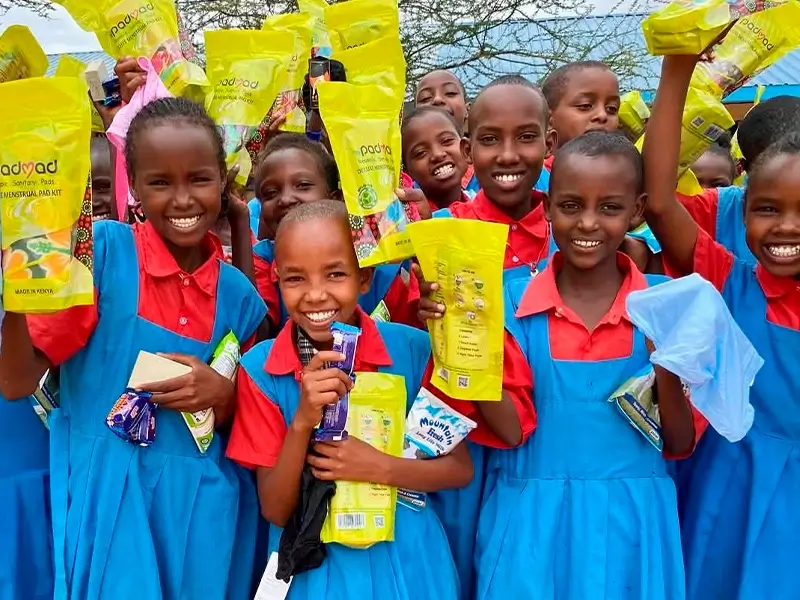
Providing menstrual products is only effective if they are reliable, accessible, and long-lasting PadMad distributes reusable, plastic-free sanitary pads that are designed to last 2–3 years.
These pads give girls the freedom to attend school and participate in daily life without fear of leaks, discomfort, or embarrassment. Families save money, and communities benefit from reduced dependency on single-use products. Reusable pads are not just practical, they’re transformative.
3. Environment: Caring for People and Planet
Menstrual health and environmental sustainability go hand in hand. Single-use pads create millions of tonnes of plastic waste annually, which can take centuries to decompose and often ends up polluting water sources and landfills.
By promoting plastic-free, reusable pads, PadMad reduces waste, protects local environments, and encourages sustainable habits. Girls learn that taking care of their bodies can also mean taking care of the planet. Every pad distributed is not just a tool for hygiene, it’s a small step toward a cleaner, healthier, and more sustainable future.
Reusable pads are safe, cost-effective, and environmentally friendly, and they work well in programme settings when combined with education and community support.
The Power of the Three Together
Education equips girls with knowledge. Sustainable pads give them the tools they need. Environmental awareness ensures the change is responsible and lasting. Together, these three pillars break the cycle of period poverty, stigma, and environmental harm.
When combined, pads + education + community ownership reduce absenteeism, save families money, and cut plastic waste.
Our approach isn’t about short-term fixes. It’s about empowering communities, building resilience, and creating a world where menstruation no longer holds girls back.
The impact is personal: girls returning to class with their heads held high, a teacher who knows how to respond when a student needs help, a boy who feels comfortable supporting his classmate. Those moments are the small, steady wins that move us toward our goal to end period poverty.
Where We Go From Here
Ending period poverty is not a single project, it’s a long road of social change. We will keep expanding distributions, deepening educational work, and scaling community leadership so that every girl can manage her period safely, affordably, and with dignity.
If you want to help us scale this work, consider donating, volunteering, or partnering with us. Together we can make period dignity the norm, not the exception.